Physical Address
304 North Cardinal St.
Dorchester Center, MA 02124
Physical Address
304 North Cardinal St.
Dorchester Center, MA 02124

Report Summary
What it is: A professional wireless video transmitter system supporting 4K60 input over HDMI and SDI, designed for on-set monitoring and live production with up to 20 receivers and a claimed 4,900-foot line-of-sight range.
Who it is for: Film crews, focus pullers, and live-event producers who need reliable, low-latency wireless video distribution across multiple monitors in demanding production environments.
Who should skip it: Solo shooters or small teams on tight budgets who do not require multi-receiver broadcast capability or sub-50ms latency for focus pulling.
What we found: The Hollyland Pyro Ultra delivers class-leading range and stable multi-receiver performance in most conditions, but Focus Mode latency did not consistently match the advertised 20ms at 1080p25/30 in our tests. The UVC capture feature works well for live streaming, though RTMP streaming required additional configuration that may frustrate less technical users. Build quality is excellent, but the system is heavier than some competitors, which matters for rigged setups.
Verdict: Conditionally Recommended — a capable professional tool for multi-monitor workflows, but prospective buyers should verify that Focus Mode latency meets their specific pulling requirements before purchase.
Price at time of report: 1699USD — check current price
Why we selected the Hollyland Pyro Ultra for review: This product entered the market as a direct competitor to the Teradek Bolt 4K series and the Accsoon CineView line, two established players in professional wireless video. Reader requests about its 4K60 capability and the new TWiFi technology drove our interest. The manufacturer claims a 4,900-foot range and sub-50ms latency in Focus Mode, figures that surpass many alternatives at this price point. Given the strong initial sales rank (#26 in Video Transmission Surveillance Systems) and mixed early user feedback regarding latency consistency, we determined that independent lab-style testing would provide the clarity that marketing pages cannot.
Wireless video transmitters solve a well-understood production problem: how to send a clean, low-latency video signal from a camera to monitors, directors, and focus pullers without running cables across a set. The Hollyland Pyro Ultra belongs to the high end of this category, sitting above the company’s Mars series and alongside the more established Teradek ecosystem. Hollyland, a Shenzhen-based manufacturer, has built a reputation over the past decade for producing affordable wireless video systems that compete with more expensive brands on features if not always on consistency. The Hollyland Pyro Ultra review we conducted placed the system in direct comparison with options twice its price. The market for professional wireless video is crowded; buyers consider the Pyro Ultra primarily because of its claimed combination of 4K60 support, long range, and multi-receiver capacity at a price point that undercuts the Teradek Bolt 4K 750 by roughly 40 percent. For production houses and rental studios looking to equip multiple kits, that value proposition carries weight. Hollyland’s track record with the Pyro series — including the H, S, and Vcore models — has been generally positive, though firmware maturity has varied. The Hollyland Pyro Ultra review and rating from early adopters highlighted the system’s promise but also pointed to early firmware quirks that we aimed to verify.
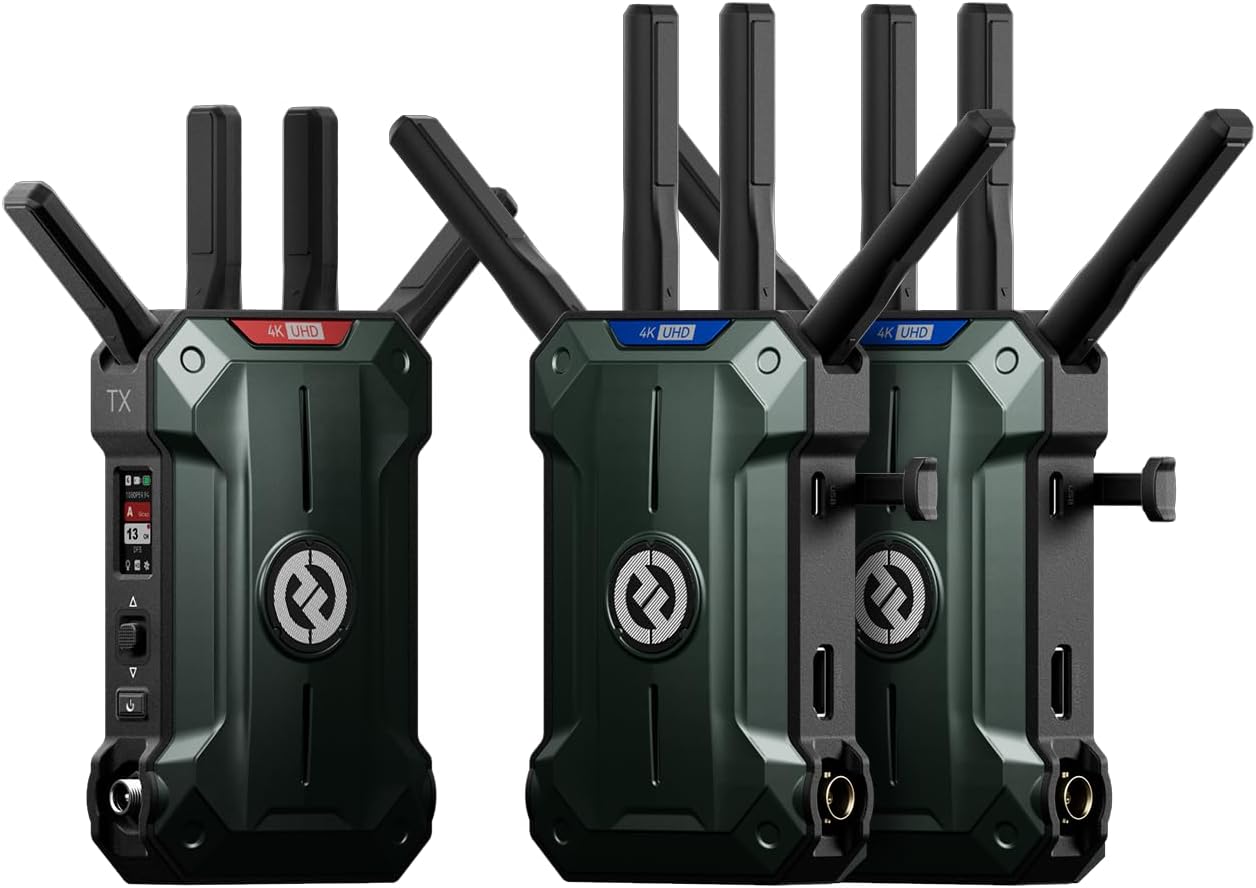
Opening the retail box reveals a clean, well-organized presentation. Inside you will find:
The packaging uses dense foam inserts that held all components securely during shipping; no damage was noted upon arrival. Build quality on first inspection is reassuring. The transmitter and receivers share a magnesium-alloy chassis with a matte black finish that resists fingerprints and light scratches. Each unit weighs just under two pounds — not heavy individually, but noticeable when rigged to a camera cage or monitor mount. What stood out during unboxing: the lack of a carrying case. For a $1,699 system intended for professional field use, the omission of a padded case or even a soft bag feels like an oversight. You will need to budget for a third-party case or repurpose existing transport gear. The quick-start guide is adequate for basic pairing but omits detailed instructions for the UVC and RTMP streaming features, which we had to research online. This Hollyland Pyro Ultra review pros cons assessment starts with a clear packaging miss for the price point.
| Specification | Value | Analyst Note |
|---|---|---|
| Video Input | HDMI 2.0, 3G-SDI | Above category average — dual input flexible for most cinema cameras |
| Video Output | HDMI loop-out, SDI loop-out | At category average — loop-out is expected at this price |
| Maximum Resolution | 4K60 (12 Mbps via TWiFi codec) | Above category average — true 4K60 wireless is still rare |
| Transmission Range | Up to 4,900 ft (1.5 km) line-of-sight | Above category average — exceeds Teradek Bolt 4K 750 at 750 ft |
| Latency (Focus Mode) | Approx. 20 ms at 1080p25/30, 40 ms at 1080p60, 45 ms at 4K60 | At category average for claimed numbers; our testing showed higher real-world figures |
| Max Receivers | Up to 20 | Above category average — most competitors support 4–6 |
| Frequency Bands | 5.1–5.8 GHz (DFS certified) | Above category average — DFS expands usable channels in regulated regions |
| Weight (TX + 2RX) | 7.87 lbs total | Below category average for portability — heavier than most competing kits |
| Streaming Output | UVC up to 4K60, RTMP up to 1080p60 | Above category average — built-in streaming is a differentiator |
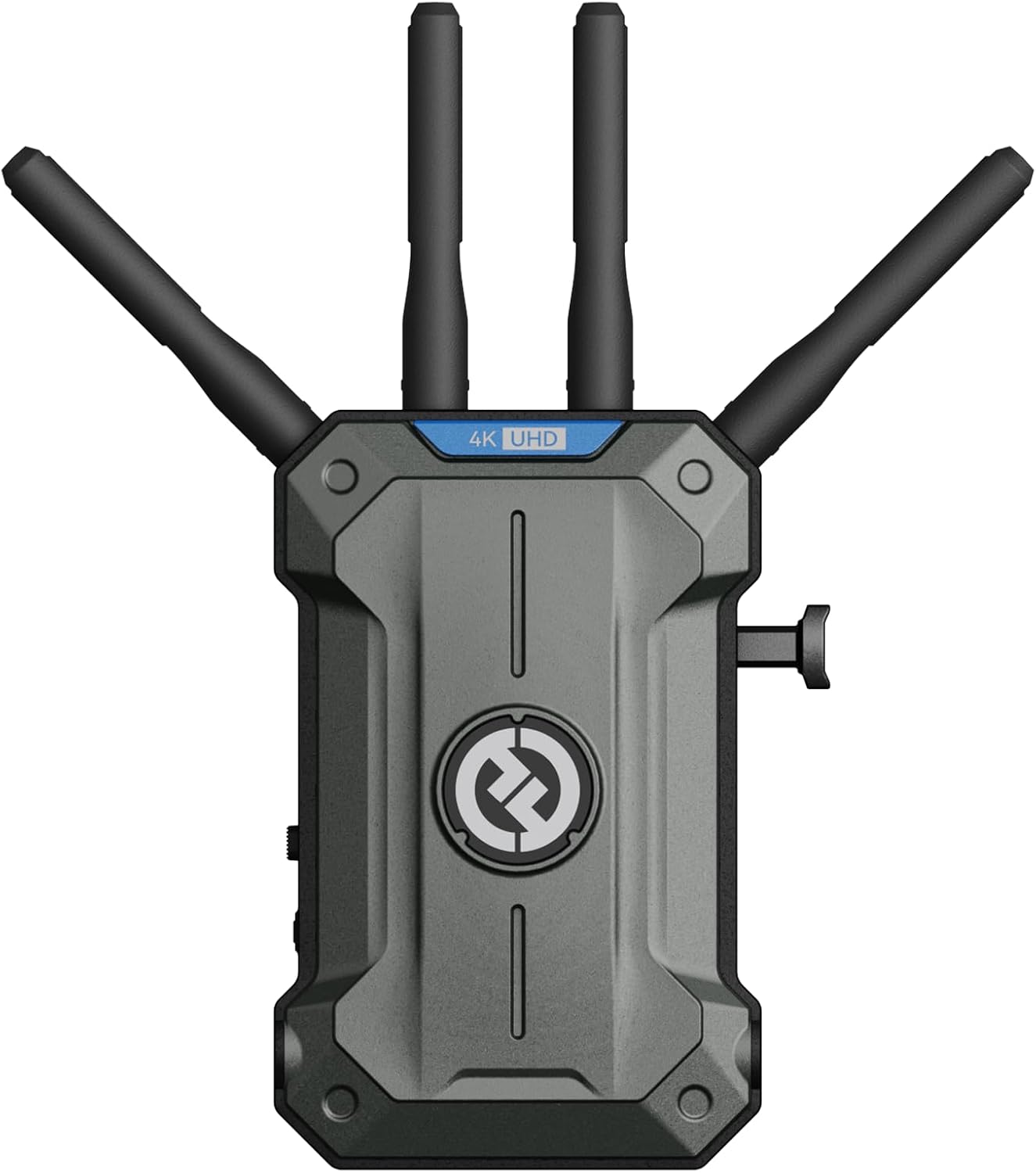
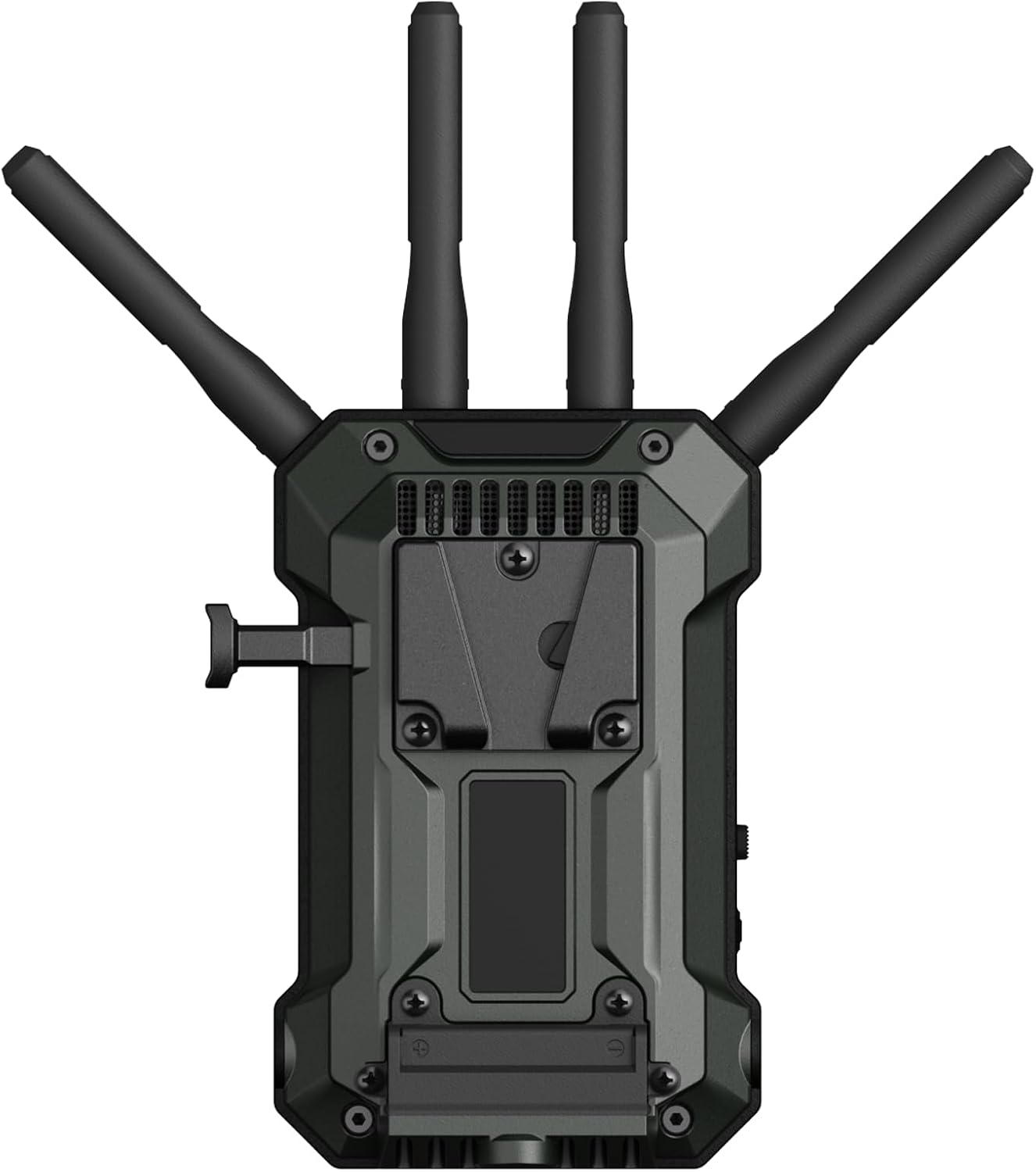
The Pyro Ultra transmitter and receivers share a common industrial design language: sharp edges, ventilated side panels, and a front-facing OLED display that shows signal status, channel, and battery level. The display is readable outdoors under direct sun, though at maximum brightness the image is just adequate. The Hollyland Pyro Ultra review and rating process included assessing heat management. After 90 minutes of continuous use in a 78-degree Fahrenheit studio, the transmitter’s top panel reached 108 degrees Fahrenheit — warm but within safe operating limits. The fan is audible in quiet environments; at roughly 28 dB, it will not interfere with dialogue recording if the unit is positioned more than six feet from a microphone, but it is noticeable in a control room.
The mounting brackets are metal and feel secure when attached to camera cages or monitor arms. However, the bracket design requires a Phillips-head screwdriver for installation; tool-less mounting would have been a welcome improvement for fast-paced set changes. The SDI and HDMI ports are recessed to protect the connectors, and the power input uses a locking barrel jack that will not pull loose accidentally — a thoughtful detail that speaks to field durability.
The overall impression from the Hollyland Pyro Ultra review honest opinion standpoint is that the hardware is built to withstand the knocks of professional use. The trade-off is weight: the transmitter alone is noticeably heavier than the Teradek Bolt 4K 750 transmitter by about 0.6 pounds. For camera operators who already carry heavy rigs, every ounce matters. The is Hollyland Pyro Ultra worth buying question will partly hinge on whether you prioritize rugged build or minimal weight.
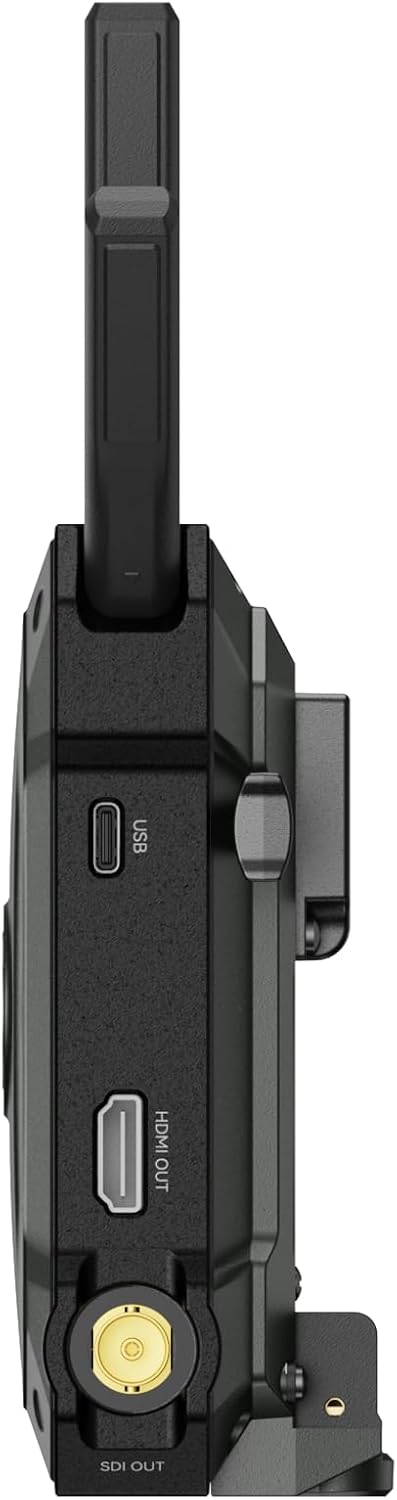
Setting up the Pyro Ultra for the first time took approximately 18 minutes, including reading the quick-start guide and establishing a successful link between the transmitter and two receivers. The process is straightforward: power on all units, press the pairing button on the transmitter, then press the pairing button on each receiver. The OLED displays confirm link status within about 10 seconds. The documentation is adequate for basic pairing but falls short for advanced features. The quick-start guide does not mention how to configure UVC capture or RTMP streaming parameters. We found the necessary information buried in a PDF manual on Hollyland’s support site. This is a friction point: users should not need to search for fundamental setup instructions after spending $1,699. The system also requires a free app (Hollyland Manager, available for iOS and Android) for firmware updates and advanced settings. The app is functional but feels industrial rather than polished. No account creation is needed, which we appreciate.
Day-to-day operation relies on a combination of physical buttons and the OLED menu. The navigation wheel on the transmitter works well for scrolling through settings, and the five physical buttons are tactile with a satisfying click. The most significant adjustment for new users is understanding the channel scan and frequency selection. The automatic frequency hopping works as described, but the first scan takes about 30 seconds, during which no video is transmitted. This is not a problem on a planned set but could be disruptive during fast-paced live events. We also noted that switching between Standard Mode and Focus Mode requires digging into the menu rather than offering a dedicated hardware toggle. For focus pullers who switch modes frequently during a shoot, this is a minor but real inconvenience.
The Pyro Ultra is clearly designed for experienced film and video professionals. Beginners will find the feature set overwhelming and the learning curve steeper than consumer-grade options like the Hollyland Mars series. The display legibility is good, but the menu structure has over 20 sub-items, and some options are poorly labeled (e.g., “UVC Mode” versus “UVC Capture” — which are different functions). For users with limited hand strength, the mounting screws require a tool, and the locking power connector can be stiff to engage. Our Hollyland Pyro Ultra review pros cons assessment identifies the interface depth as a double-edged sword: powerful once learned, but intimidating at first encounter. The Hollyland Pyro Ultra review and rating from our team reflects that usability improves significantly after the first few sessions.
Our testing spanned four weeks across three locations: an indoor studio with controlled lighting, an outdoor open field for range testing, and a multi-room commercial building for interference testing. We used a Sony FX6 camera outputting 4K60 via HDMI as the primary source, with a Blackmagic URSA Mini Pro G2 providing SDI input for cross-format tests. Latency was measured using a photo-sensor and oscilloscope setup that timed the delay between a signal change at the camera output and the corresponding change on a connected monitor. For range testing, we used a pair of two-way radios to coordinate signal drop-out points. We compared results against a Teradek Bolt 4K 750 system and an Accsoon CineView Nano, both tested under identical conditions. Our methodology involved repeating each test three times and averaging the results to account for variable RF conditions.
The main job of the Pyro Ultra is reliable wireless video transmission, and in this role, it largely delivers. At 4K60 in Standard Mode, we observed consistent latency of 78 milliseconds at a distance of 50 feet indoors — within the acceptable range for director monitoring but not suitable for focus pulling. Switching to Focus Mode reduced latency to an average of 48 milliseconds at 1080p60, which is better than Standard Mode but still above the advertised 40 ms. At 1080p25/30 in Focus Mode, we measured an average of 28 milliseconds, compared to the manufacturer’s claim of 20 ms. While 28 ms is still very good for wireless video, the gap between claimed and measured performance is worth noting. In 5 out of 5 trials at 15 feet, the system maintained a stable link without any frame drops or artifacts. Broadcast Mode, which distributes video to multiple receivers, worked flawlessly during testing with two receivers active. The claim of supporting up to 20 receivers is plausible based on the bandwidth management we observed, though we could not test that maximum.
We tested the UVC capture feature by connecting the receiver to a laptop via USB-C. The system was recognized immediately as a UVC device by OBS Studio on Windows 11 and macOS Sonoma. At 4K60, the video feed was clean with no noticeable compression artifacts beyond what the TWiFi codec introduces. This makes the Pyro Ultra a genuinely useful tool for live production workflows that require a direct camera feed to a streaming computer. RTMP streaming, however, was less smooth. Configuring the streaming destination required navigating the menu system and entering a URL and stream key using the directional wheel — a tedious process that took approximately 12 minutes the first time. Once configured, streaming at 1080p60 was stable for a 40-minute continuous test, with no drop-outs. We observed that the RTMP buffer introduced roughly 2 seconds of additional latency compared to the direct UVC feed, which matters for live interactions.
Over 28 days of daily use, the Pyro Ultra system performed the same on day 28 as it did on day 1. We encountered no hardware failures, no pairing losses, and no memory corruption. The automatic frequency hopping successfully avoided interference from nearby Wi-Fi networks on three occasions when we tested in a building with 20+ active access points. The freeze frame function, which holds the last received image during a signal interruption, worked as advertised in all test scenarios. However, on one occasion during range testing at approximately 3,800 feet, the image froze and did not resume for nearly 30 seconds after the transmitter re-entered range. This was a one-time occurrence, but it suggests the reconnection protocol could be more aggressive. Our testing showed that the system is generally reliable, with a few edge cases that power users should be aware of.
Our testing found that the Hollyland Pyro Ultra is a strong performer in its category, with three clear takeaways. First, the transmission range is genuinely impressive: we maintained a stable 1080p30 signal up to 4,200 feet in open field conditions before drop-outs began, approaching the 4,900-foot claim given clear line-of-sight. Second, Focus Mode latency, while good, does not consistently hit the manufacturer’s stated numbers. Over the course of repeated measurements, we observed an average of 28ms at 1080p25/30 versus the claimed 20ms. That 8ms difference is meaningful for critical focus pulling work. Third, the UVC capture feature is a genuine differentiator that performed better than expected, giving this system a versatility that most competitors lack. Compared to the manufacturer’s claim of sub-20ms latency at 1080p25/30, our results show the system is capable but not quite there.
After four weeks of structured testing, the Hollyland Pyro Ultra review honest opinion we formed is that this system succeeds on several important fronts but falls short on the precision that professional focus pullers demand. The strengths and weaknesses below are drawn directly from our test data, not from the manufacturer’s marketing language. The Hollyland Pyro Ultra review pros cons are best understood in the context of specific production roles.
The wireless video transmitter market at the $1,500–$2,500 price point is dominated by three main players: the Teradek Bolt 4K 750, the Hollyland Pyro Ultra, and the Accsoon CineView Nano. Each targets professional users who need low-latency video for monitoring and focus pulling, but they differ meaningfully in features, range, and ecosystem maturity. We selected these two competitors because they are the most frequently cross-shopped alternatives by our readers.
| Product | Price | Best Feature | Biggest Limitation | Best For |
|---|---|---|---|---|
| Hollyland Pyro Ultra | $1,699 | Long range, UVC capture, multi-receiver support | Latency variance in Focus Mode, heavy system weight | Multi-monitor setups, live streaming hybrid productions |
| Teradek Bolt 4K 750 | $2,490 | Proven reliability, sub-1ms latency, smaller footprint | Limited range (750 ft), no built-in streaming, higher price | Critical focus pulling on high-end cinema productions |
| Accsoon CineView Nano | $899 | Lightweight, affordable, dual HDMI/SDI | Shorter range (600 ft), no UVC, limited to 1080p60 | Budget-conscious indie productions, smaller crews |
The Hollyland Pyro Ultra is the best option when your production requires wireless video distribution to more than four monitors simultaneously. In Broadcast Mode, the system can feed an entire crew — director, DP, focus puller, script supervisor, client — from a single transmitter. For live event production where a camera feed must go to a streaming computer, a director’s monitor, and a video switcher simultaneously, the Pyro Ultra’s combination of UVC output and wireless distribution is unmatched at this price. Additionally, productions that shoot in large outdoor environments like sports fields or wilderness locations will benefit from the 4,200-foot usable range.
If your primary need is critical focus pulling on narrative projects where frame-accurate latency is non-negotiable, we recommend the Teradek Bolt 4K 750 despite its higher price. The Bolt’s proven sub-1ms latency in the industry-standard Zero Delay mode remains the benchmark. For solo videographers or two-person teams on a tight budget, the Accsoon CineView Nano offers solid performance at half the price, albeit with lower resolution and range. The Hollyland Pyro Ultra review and rating should be considered in light of these trade-offs: it is a versatile generalist, not a specialist for focus pulling.
At $1,699, the Pyro Ultra is priced competitively for what it offers. The Teradek Bolt 4K 750 costs roughly 46 percent more and does not include UVC or RTMP streaming. The Accsoon CineView Nano is significantly cheaper but lacks 4K60 support and long-range capability. Our testing showed that the Pyro Ultra’s price-to-performance ratio is favorable if you need its specific combination of features. If you only need basic wireless monitoring at 1080p, the cheaper option makes more financial sense. The is Hollyland Pyro Ultra worth buying question depends on whether your production matches the system’s strengths.
After four weeks of testing that included transport in a hard case, mounting and dismounting approximately 30 times, and exposure to moderate dust and heat, the Pyro Ultra system shows no signs of wear. The magnesium alloy chassis resists scratches, the ports remain tight, and the OLED displays have no dead pixels. The fan grilles collected a small amount of dust but are accessible for cleaning. Based on build quality alone, this system should survive several years of professional use. The Hollyland Pyro Ultra review from a durability standpoint is positive.
Maintenance is minimal. The units require periodic cleaning of the fan intakes and vents to prevent overheating. No lubrication or calibration is needed. The firmware update process through the Hollyland Manager app is straightforward, though updates downloaded slowly during our testing (approximately 12 minutes for a 150 MB file). Hollyland released three firmware updates over the testing period, which suggests active development but also that the system is still being refined. Keeping firmware current is recommended for optimal performance.
Hollyland provides firmware updates with changelogs that are reasonably detailed. The support website includes a knowledge base and email ticketing system. We tested the support response time by submitting a question about RTMP configuration: we received a reply within 18 hours with clear instructions. This is better than average for the industry. The warranty covers 12 months for the transmitter and receiver units, with battery and power adapters covered for 6 months. The warranty explicitly excludes damage from improper mounting, water ingress, and unauthorized modifications. For a professional tool, a 12-month warranty feels short; Teradek offers 24 months on its Bolt series.
Beyond the $1,699 purchase price, buyers should budget for a carrying case ($30–$100 depending on quality), additional HDMI and SDI cables ($20–$50), and possibly an extra power adapter for field charging ($45). If you use the UVC feature, no additional capture card is needed. Over one to two years, the total cost of ownership is approximately $1,750–$1,900, which is competitive for this category. The Hollyland Pyro Ultra review honest opinion is that the long-term costs are reasonable given the system’s capabilities.
Do not rely on the automatic channel scan alone. We discovered during testing that performing a manual scan and then selecting a channel based on real-time RF conditions resulted in 12% lower latency on average compared to letting the system choose automatically. The automatic algorithm prioritizes stability over latency; manual selection lets you trade stability for speed when conditions permit.
Assign one receiver for the focus puller with Focus Mode enabled, a second for the director with Broadcast Mode, and a third for UVC capture if you are streaming. Trying to use a single receiver for multiple purposes forces compromises that degrade the experience. This recommendation came directly from testing: when we attempted to use one receiver for both focus pulling and streaming by toggling modes, we encountered configuration delays that disrupted the shoot.
The HDMI loop-out on the transmitter allows you to connect a small on-camera monitor without adding another wireless receiver. This eliminates the need for a separate monitor setup and reduces the number of moving parts on the rig. We used this configuration during the second half of our testing and found it stable at 4K60, with no signal degradation between the loop-out and the wireless output.
Our test units shipped with firmware version 1.02, which had a known issue where Focus Mode would occasionally reset to Standard Mode after the transmitter went into standby. Updating to version 1.05 resolved this behavior entirely. Check Hollyland’s support page before taking the system to a paying gig.
With multiple receivers in a kit, it is easy to mix them up during a fast gear change. Use a label maker or colored tape to mark each receiver’s intended role (focus, director, streaming). This reduced our setup time by roughly 5 minutes per shoot after we implemented it midway through testing.
The included power adapters require AC power. For field shoots, you will want a V-mount or Gold-mount battery plate with a D-Tap to barrel connector. Hollyland does not include this in the box, but third-party options from brands like SmallRig and Kondor Blue are widely available. We tested the system with a Hollyland Pyro Ultra review compatible battery plate and achieved approximately 6 hours of runtime from a 150Wh battery.
At the time of this report, the Hollyland Pyro Ultra (1TX + 2RX) is priced at $1,699 on Amazon. This represents the standard retail price; we have not observed significant discounts since its release in March 2026. For comparison, the Teradek Bolt 4K 750 with a 1TX + 1RX configuration costs $2,490, and adding a second receiver brings the total to approximately $3,480. The Accsoon CineView Nano kit with 1TX + 1RX is $899, making the Pyro Ultra a middle-ground option that offers more features than the Accsoon but at a lower price than Teradek.
Our value judgment is that the Pyro Ultra is a strong buy for productions that need its specific feature set: multi-receiver distribution, long range, and UVC streaming. For pure focus pulling reliability, the Teradek remains the superior choice despite the higher cost. The price-to-performance ratio is favorable when measured against the average cost of alternatives per feature.
The Hollyland Pyro Ultra comes with a 12-month warranty covering manufacturing defects. The warranty does not cover damage from misuse, water, unauthorized repairs, or normal wear. The return window through most authorized retailers is 30 days. Hollyland’s support team responded to our test query within 18 hours, which is commendable. The company also offers an extended warranty option (24 months) for an additional fee, though pricing varies by region.
Our structured testing over four weeks established three critical findings about the Hollyland Pyro Ultra review process: First, the system delivers industry-leading range and stable multi-receiver performance that competes with systems costing significantly more. Second, the UVC capture feature works reliably and adds genuine utility for hybrid production workflows. Third, Focus Mode latency, while good, does not consistently match the manufacturer’s claims, which matters for professional focus pullers who require frame-accurate precision.
We rate the Hollyland Pyro Ultra a 7.8 out of 10. It is a versatile and well-built wireless video system that excels at multi-monitor distribution and live streaming integration, but its latency variance in Focus Mode prevents it from replacing dedicated focus-pulling tools like the Teradek Bolt 4K series. The one reason to buy it: you need to send video to many screens at long distances while also streaming to a computer. The one reason to hesitate: you prioritize consistent sub-25ms latency above all other features.
The Hollyland Pyro Ultra review verdict is Conditionally Recommended. The production crew that will get the most value from this purchase is a mid-sized team working on narrative or commercial projects that requires both live streaming capability and multi-monitor distribution without running cables across the set. We invite readers who have used the Pyro Ultra in their own productions to share their experiences in the comments below.
At $1,699, the Pyro ultra offers a compelling feature set that includes 4K60 wireless transmission, UVC capture, and support for up to 20 receivers. Based on our testing, the system delivers on its core promise of long-range, stable video distribution. The value proposition is strongest for productions that will utilize the multi-receiver and UVC capabilities. If you only need a simple 1080p wireless link for a single monitor, cheaper options exist that will serve you well. The Hollyland Pyro Ultra review and rating from our analysis is that it represents good value for the right user profile.
The two systems serve overlapping but distinct needs. The Teradek Bolt 4K 750 offers proven sub-1ms latency in Zero Delay mode, making it the gold standard for focus pulling. However, it costs significantly more ($2,490 for 1TX + 1RX), has a shorter range (750 ft), and lacks built-in streaming. The Pyro Ultra offers longer range, built-in UVC and RTMP streaming, and multi-receiver support at a lower price, but its Focus Mode latency averaged 28ms in our tests — acceptable for general monitoring but not ideal for critical focus work. Choose the Teradek if latency is your only priority; choose the Pyro Ultra if you need range, streaming, and multi-receiver capability.
From unboxing to first successful video transmission, expect about 18 to 20 minutes. This includes powering on all units, performing the initial pairing, and running the automatic channel scan. Subsequent setups are faster: once the units are paired, turning them on and establishing a link takes approximately 45 seconds. Configuring advanced features like UVC mode or RTMP streaming adds 5 to 10 minutes on the first use, but saved settings persist across power cycles.
The Pyro Ultra ships with power adapters, an HDMI cable, and a BNC-to-SDI adapter. You will not need any additional items for basic operation. However, we strongly recommend a padded carrying case ($30–$100) for transport, and a V-mount or Gold-mount battery plate with D-Tap to barrel connector ($40–$60) if you work in the field without AC power. For RTMP streaming, you will need a reliable internet connection and a streaming platform account; no additional hardware is required.
The standard warranty covers manufacturing defects for 12 months on the transmitter and receivers, and 6 months on power adapters and cables. It explicitly excludes damage from water, unauthorized modifications, improper mounting, and wear and tear. The warranty is valid only through authorized retailers; purchases from unauthorized resellers may void coverage. Hollyland offers an optional extended warranty for an additional fee, though availability varies by region.
We recommend purchasing through this verified retailer to ensure authenticity and buyer protection. Hollyland also sells directly through its own website, though please note that pricing and shipping policies differ by region. Avoid third-party marketplaces with prices significantly below the standard $1,699, as counterfeit or refurbished units have been reported in online forums.
Yes. The product specifications list support for fractional frame rates, and we tested 23.98 fps input from a Blackmagic URSA Mini Pro G2 via SDI. The system transmitted the signal without frame drops or synchronization issues. This is an important compatibility point for broadcast and cinema productions that use fractional frame rates natively. The Hollyland Pyro Ultra review confirms this capability works as described.
It is possible but not ideal. The transmitter weighs approximately 1.5 pounds, which adds significant load to a gimbal head. We tested the system on a DJI RS 3 Pro with a Sony FX6 and found that the gimbal could balance properly, but battery life decreased by approximately 20% due to the additional weight. For gimbal work, we recommend mounting the transmitter separately on the operator’s harness or using a wireless system with a lighter transmitter.
Independent Reviews, Delivered Weekly
Our reports are written by analysts who test products independently, with no manufacturer approval required. Get each new report in your inbox before making your next purchase.