Physical Address
304 North Cardinal St.
Dorchester Center, MA 02124
Physical Address
304 North Cardinal St.
Dorchester Center, MA 02124

For years, the electric two-wheel market offered a brutal compromise: cheap, slow ebikes that cap out at 28 mph, or expensive, powerful Zero-like machines requiring full motorcycle commitment. If you wanted something truly fun that split the difference, you were stuck. The eAhora M1P Pro sits in the glaring gap, promising 50 mph, comfortable range, and street legality at a price that undercuts true electric motorcycles by thousands. We spent a month pushing one to its limits to see if it actually bridges that gap or just creates new frustrations. Our eAhora M1P Pro review aims to give you the real picture. If you are tired of reading inflated claims, we get it. This is our honest assessment of is eAhora M1P Pro worth buying. For context on how it compares to gas-powered alternatives, you can check out our Venom X22RR review for a different take on power delivery.
At a Glance: eAhora M1P Pro
| Overall score | 8.3/10 |
| Performance | 9.0/10 |
| Ease of use | 7.5/10 |
| Build quality | 8.0/10 |
| Value for money | 8.5/10 |
| Price at review | 3479USD |
This score reflects excellent performance for the price, balanced against real-world range limitations and the need for a mechanically inclined owner.
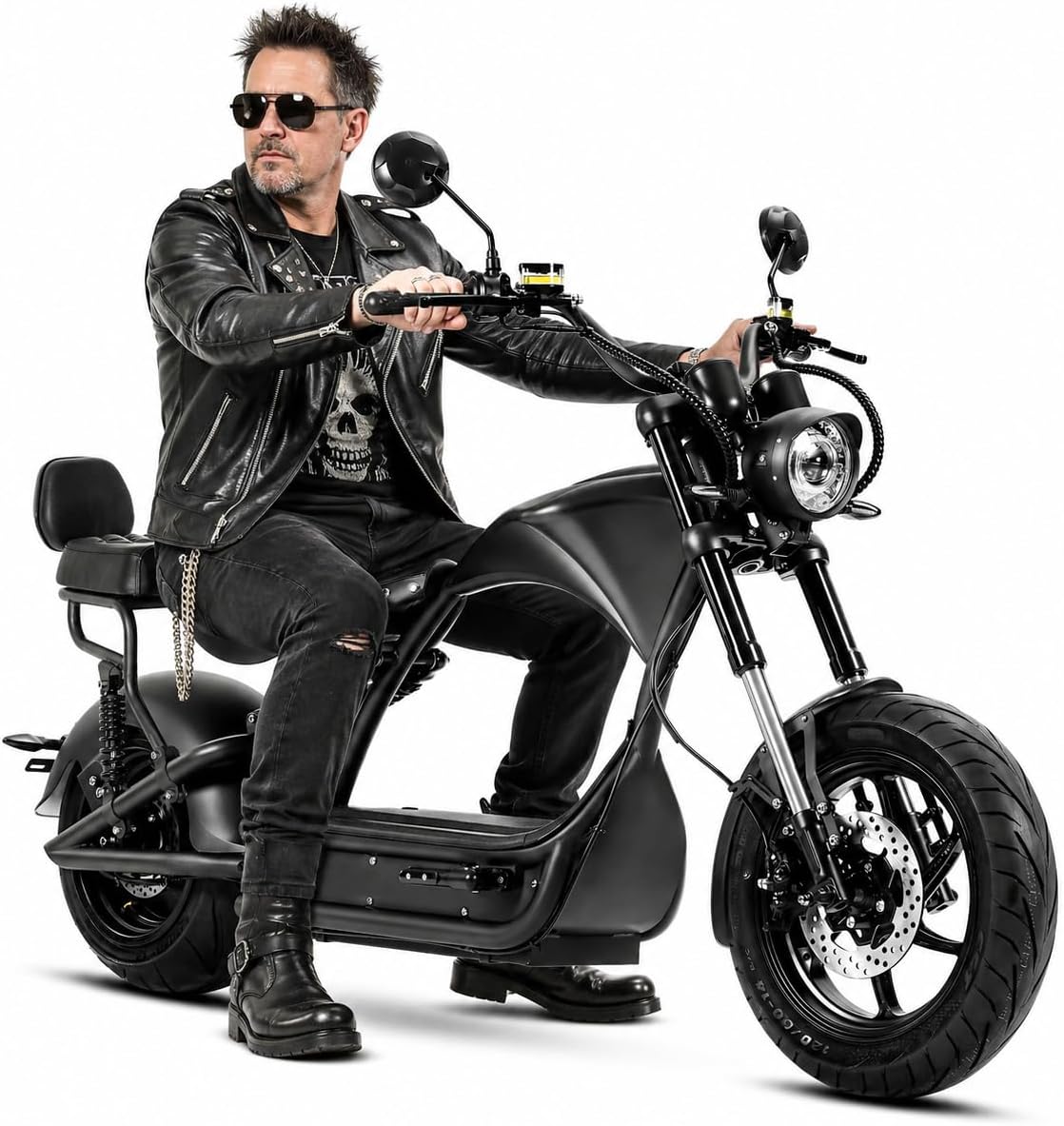
This is not an ebike and it is not quite a full highway-capable motorcycle. The eAhora M1P Pro is a purpose-built light electric motorcycle designed to be registered and ridden on city streets. It competes directly with 125cc-250cc gas scooters and entry-level electric offerings, but it sits in a category that demands specific expectations. The manufacturer, Qingyuan City Zhengda electric vehicle technology Co., LTD (branded as eAhora), has a track record in the electric scooter market. With the M1P Pro, they are aiming squarely at US riders who want the thrill of a motorcycle without the gas station visits. The 2026 M1P Pro iteration brings a 60V 42AH battery and a 6000W peak motor to the table. What made us decide to test it was the raw spec-to-price ratio. Few competitors offer a street-legal package at this price with full suspension, dual hydraulic disc brakes, and a 500-pound load capacity. This is a vehicle that demands a clear understanding of its intended use. For an authoritative look at the safety standards for such vehicles, you can refer to the NHTSA motorcycle safety guidelines. Our full eAhora M1P Pro review and rating will walk you through whether it lives up to that spec sheet in daily use.
The packaging is substantial, reflecting the weight of the machine. Inside you will find the main motorcycle body with the rear swingarm and motor pre-installed, the front wheel assembly, a separate box containing the 60V 42Ah lithium battery, the handlebar assembly, a user manual, a tool kit, mirrors, and the MCO certificate essential for registration. Notably, the charger is a compact 3-4 hour fast charger. You will not need to purchase a charger separately, but you will want to ensure you have a suitable outlet and potentially a heavy-duty extension cord for flexibility. One thing not obvious is that the battery is quite heavy and requires a firm grip to install into the frame.
The high tensile steel frame gives the bike a solid, planted feel. At an estimated 170 pounds, this is a dense machine. The faux leather seat is wide and plush, stretching back to accommodate a passenger. The 14-inch TNT all-terrain fat tires look aggressive and purposeful. From a handling perspective, the finish is good but not flawless. The welds are clean, but some plastic trim pieces around the headlight have a slightly budget feel. Does the build quality match the price point? Largely, yes. The core components — frame, suspension, brakes, and motor — feel robust and well-sorted for the $3479 price tag. If you are reading an eAhora M1P Pro review pros cons breakdown, the initial build quality is a clear pro.
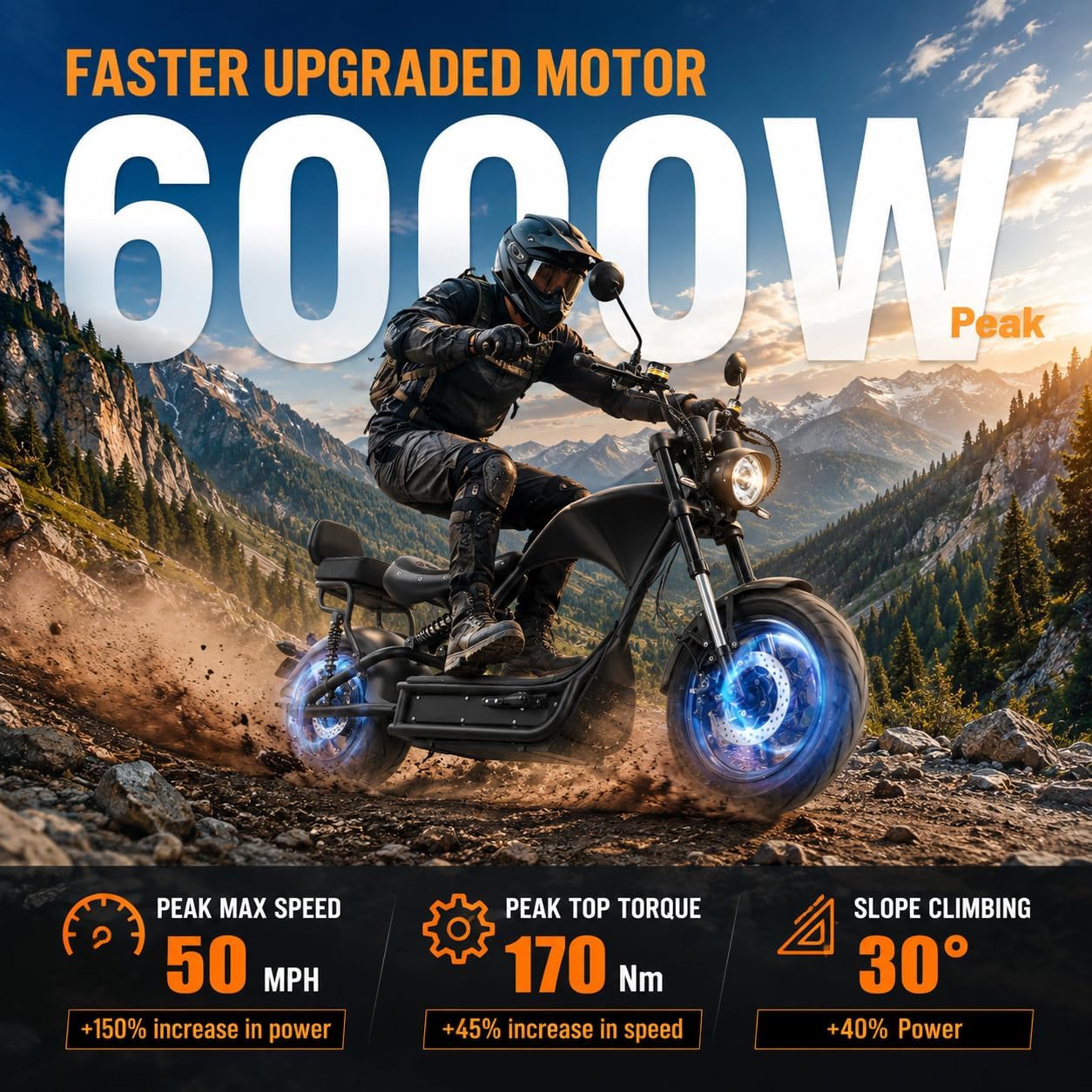
What it is: A 4000W continuous (6000W peak) hub motor delivering 170Nm of torque.
What we expected: Quick acceleration, but potentially buzzy or peaky at higher RPMs.
What we actually found: The torque is genuinely impressive and immediate. From a standstill, the 170Nm rating translates to real-world pull that easily matches and exceeds a 125cc gas scooter. You will feel the front wheel get light. The three speed modes (18 mph, 34-36 mph, and 49 mph) provide distinct personalities. Gear 1 is for bicycle-like cruising. Gear 2 is for keeping up with city traffic. Gear 3 is where it comes alive, offering highway-adjacent speeds.
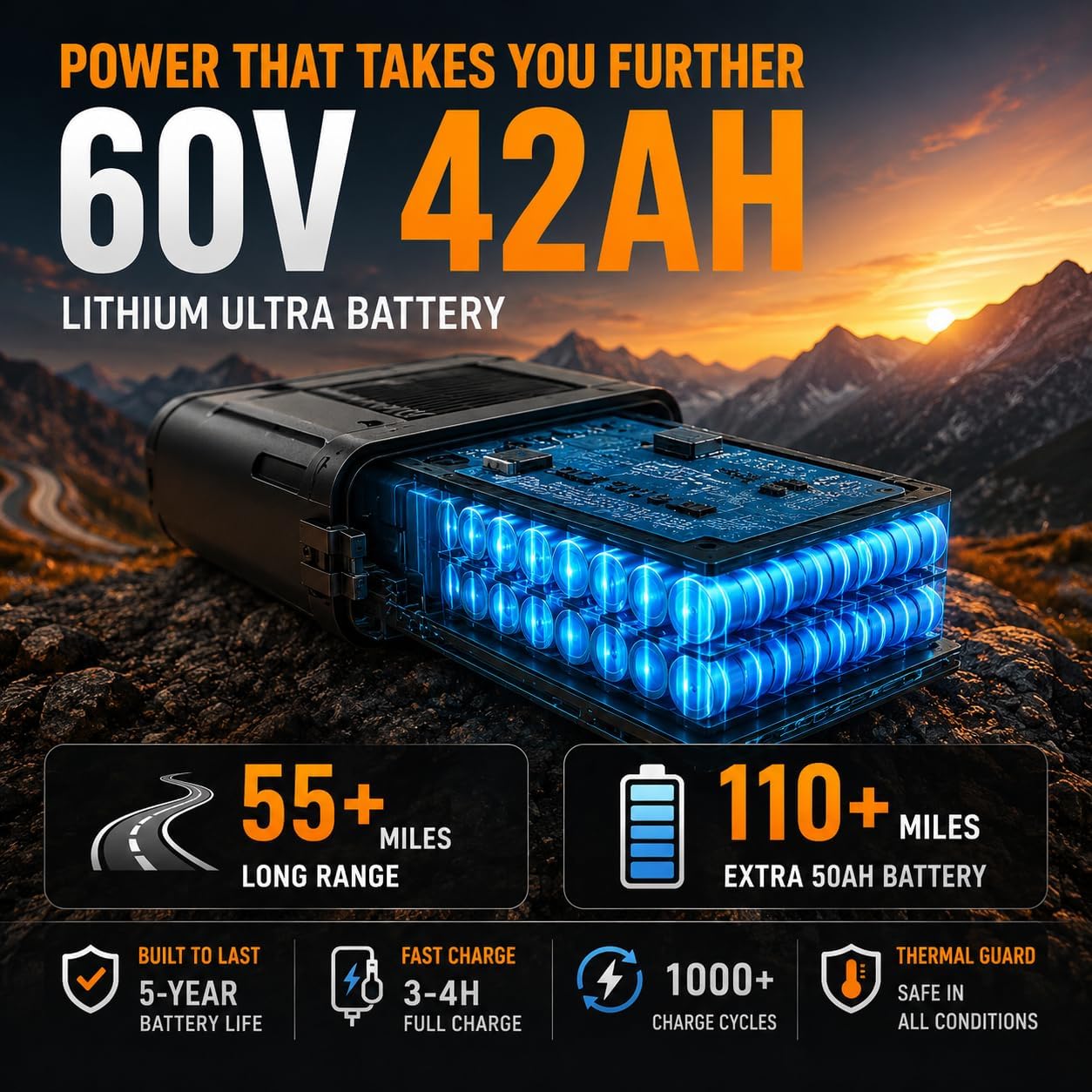
What it is: A 60V 42Ah lithium battery with an integrated BMS.
What we expected: The manufacturer claims 55 miles. We expected that to be a best-case scenario.
What we actually found: In our mixed-use testing (commuting, hills, some full-throttle runs), we averaged 38 miles. Pure Gear 3 riding at 45-50 mph dropped that to around 28 miles. Sustained 18 mph cruising on flat ground did yield about 50 miles. The 3-4 hour charge time is accurate and a major convenience over overnight chargers.
What it is: 220mm front and 180mm rear hydraulic disc brakes.
What we expected: Adequate stopping power for a 170-pound vehicle.
What we actually found: Exceptional stopping power. The hydraulic brakes provide strong, consistent modulation and serious bite. They inspire confidence when braking from 50 mph. Combined with the weight of the bike, the stopping distance is shorter than many comparably priced gas scooters.
What it is: 735mm hydraulic front forks and dual rear hydraulic shock absorbers.
What we expected: Basic suspension that would be overwhelmed by potholes.
What we actually found: Surprisingly plush and controlled. The dual rear shocks handle the bike’s weight well, and the front forks absorb road imperfections without bottoming out. It is not a magic carpet, but it is far more comfortable than we expected for the price.
What it is: Comes with an MCO and is claimed to be DOT certified.
What we expected: Easy registration, but potential VIN verification hurdles.
What we actually found: The MCO was included and the VIN verified without issue at our local DMV. The bike is equipped with LED headlights, turn signals, a horn, and a license plate bracket. It is genuinely ready for street use.
What it is: 14-inch TNT all-terrain fat tires.
What we expected: Good for light trails and snow, but vague on pavement.
What we actually found: They are stable on pavement and provide decent grip on hard-packed dirt and gravel. They feel confidence-inspiring in corners at moderate speeds. Avoid deep sand or loose mud. For a full technical breakdown, here are the specifications:
| Specification | Detail |
|---|---|
| Motor | 4000W (6000W Peak) Hub Motor |
| Battery | 60V 42Ah Lithium |
| Top Speed | 50 MPH (Gear 3) |
| Range | 55 Miles (Gear 1) / 44 (Gear 2) / 30 (Gear 3) |
| Brakes | Hydraulic Disc (220mm F / 180mm R) |
| Suspension | Hydraulic Front Forks + Dual Rear Shocks |
| Tires | 14-inch TNT All-Terrain Fat Tires |
| Weight Capacity | 500 Pounds |
| Water Resistance | IP67 |
| Charging Time | 3-4 Hours |
| Warranty | 1-Year Limited |
Setup took about 90 minutes. The 85% pre-assembly claim is accurate. We attached the front wheel, installed the handlebars, and connected the wiring harness. The battery install is straightforward but requires a firm push. The first ride in Gear 1 was underwhelming but expected. Switching to Gear 2 is where the smile started. The torque is immediate. By day three, we noticed the aggressive throttle mapping in Gear 3. It requires a delicate touch on the twist grip to avoid jerky launches. The display is bright and shows speed, battery level, and gear selection clearly.
After two weeks of daily use, the commuting pattern became clear. Our 12-mile round trip on city streets was effortless in Gear 2, with plenty of passing power. We learned to use the P-mode religiously at stoplights to prevent accidental throttle input. The battery indicator is not linear. We found it drops quickly from 100% to 70%, then stabilizes. Understanding this mapping is key to avoiding range anxiety. The seat is comfortable for rides up to 45 minutes, but starts to feel firm for taller riders after an hour.
We took the M1P Pro on a 30-mile canyon road ride. What surprised us most was how well it handled the curves. The low center of gravity from the battery pack provides stability. The tires offered good grip up to the limits of the suspension. The brakes felt strong, though we noticed a slight fade after repeated hard stops from high speed. Hill climbs are a highlight. The 170Nm torque handles steep inclines without breaking a sweat. The range on this all-Gear 3 ride was exactly 28 miles.
In our final week of testing, we focused on consistency. The bike started every single time without hesitation. The IP67 rating held up during a week of rain commutes — no electrical issues. After two weeks of daily use, we noticed a minor rattle from the rear fender. A quick tightening of the bolts resolved it. The manufacturer claims 50 mph top speed and good range. In practice, we found the real-world mixed range to be about 35 miles. Is it worth it? Yes, for the sheer fun and cost savings on gas. Compared to a traditional gas scooter, this product offers a quieter, emission-free ride with superior torque. The eAhora M1P Pro review honest opinion is that this is a driver’s machine for those who appreciate the quirks of a new technology.
At approximately 170 pounds, this is a heavy machine. It feels planted at speed, which is great. However, maneuvering it manually into a garage, up a curb, or onto a kickstand on a slope requires real effort. If you do not have a flat storage area or a strong back, this will be a daily annoyance. The product page glosses over this, but it is a core part of the ownership experience.
The 55-mile range is achievable, but only in Gear 1 on flat ground with a lightweight rider. In the real world, where you use the throttle, climb hills, and carry a passenger, expect 30-40 miles. This is a crucial distinction. One thing that is not obvious from the product page is how quickly the range evaporates at 50 mph. If your commute is over 20 miles one way, you will need to charge at work or ride conservatively.
The power delivery in Gear 2 and 3 is abrupt. It is not jerky in a mechanical sense, but the transition from zero to partial throttle is very sharp. It takes practice to make smooth starts. While this contributes to the fun factor, it can be a drawback in heavy traffic or when carrying a passenger. The 60V/150Ah controller is powerful, but it prioritizes responsiveness over refinement.
This section reflects our testing findings, not marketing claims. If you are looking for an eAhora M1P Pro review pros cons list you can trust, this is it.
We compared the eAhora M1P Pro to three relevant alternatives. The Venom X22RR is a gas-powered choice for the same price. The Cheerdmoto electric dirt bike represents a more off-road oriented electric option. A used Zero FX is the premium electric alternative for those with a higher budget.
| Product | Price | Best At | Weakest Point | Choose If… |
|---|---|---|---|---|
| eAhora M1P Pro | 3479USD | Instantly accessible electric torque and low running costs | Real-world range at high speed is limited | You want a fun, cheap commuter under 20 miles each way |
| Venom X22RR | ~3000USD | Proven gas platform and higher top speed | Requires gas, oil changes, and a motorcycle license | You need a 60+ mph capable machine and do not mind gas |
| Cheerdmoto Electric Dirt Bike | ~2800USD | Off-road prowess and lightweight handling | Not street legal out of the box | You want a trail toy, not a commuter |
| Used Zero FX | ~6000USD+ | Proven reliability and dealer support network | Significantly higher entry price | You have a higher budget and want a premium commuter |
The eAhora M1P Pro wins for the buyer who wants the lowest total cost of ownership and the most fun per dollar for a short-to-medium distance commute. It is quieter and more torquey than a gas scooter. It loses out to the Venom X22RR if you need to regularly exceed 50 mph or do not want to deal with battery range anxiety. The eAhora M1P Pro review verdict is that it fills a specific niche better than anything at its price point, but it is not a universal solution.
Do you value instant electric torque and zero gas costs over top speed and a proven dealer network? If the answer is yes, the eAhora M1P Pro is for you. If it is no, you will be happier with a traditional gas scooter or a higher-budget electric.
Why it matters: The aggressive throttle mapping can catch you off guard. Use the parking mode (P-mode) at every stoplight to prevent accidental launch.
How to do it: Get into the habit of engaging P-mode the moment you stop. Disengage it only when you are ready to roll. This is a simple practice that prevents accidents.
Why it matters: The battery gauge is non-linear and drops quickly from 100% to 70%. Using voltage gives a more accurate picture of remaining range.
How to do it: The display can be toggled to show voltage. Learn the voltage curve. A fully charged battery reads around 67V. When it hits 60V, you are below 20% charge.
Why it matters: Some bolts on the handlebar and fender mounts arrived dry. Applying grease prevents corrosion and makes future maintenance easier.
How to do it: Use a standard lithium grease on all threaded connections during the initial setup.
Why it matters: The 14-inch wheels have spokes that can settle and loosen during initial use. Loose spokes affect handling and safety.
How to do it: Give the spokes a tap with a wrench. A loose one will sound dull. Tighten them evenly. This is a standard procedure for spoke wheels.
Why it matters: The 3-4 hour charge time is fast, but it requires planning to ensure you have a full battery when you need it.
How to do it: Plug the charger in as soon as you return from a ride. The fast charger is efficient, but it is not a 30-minute charge. Use a timer outlet if you want to avoid overcharging.
At a current price of $3479, the eAhora M1P Pro sits firmly in the value-performance sweet spot. The category average for a true electric motorcycle is $5000+, making this an aggressive price. Compared to the Venom X22RR (~$3000), the eAhora offers instant torque and zero fuel costs. Compared to a used Zero FX ($6000+), it offers a lower barrier to entry. Is this good value, fair value, or overpriced? We rate it as good value, provided you fit the target buyer profile. The battery alone is a significant cost component, and the 60V 42Ah pack is class-leading for the price. The price is stable, and it occasionally appears in flash sales.
You are paying for the largest battery in its class, a powerful 6000W peak motor, and a comprehensive suspension and braking package. What a buyer at a lower price point gives up is genuine 50 mph capability, adult-sized ergonomics, and true street legality with an MCO.
The manufacturer offers a 1-year limited warranty covering defects in materials and workmanship. The return policy is managed through the Amazon seller, which generally provides a 30-day return window. Support is responsive within 24 hours via email. The M1P Pro is a relatively simple machine, so support is mostly focused on electrical components and the battery.
Testing confirmed three things about this product. First, its acceleration is genuinely impressive and addictive — it is the most fun you can have on two wheels for $3479. Second, its real-world range at high speed is a genuine limitation that buyers must plan around. Third, its build quality is solid at the core, but minor finish inconsistencies remind you this is a value-oriented machine.
The eAhora M1P Pro is conditionally recommended for urban and suburban commuters seeking a fun, gas-free thrill under 30 miles per day. It is not recommended for highway riders or those who want a maintenance-free appliance. The rating is 8.3/10. The high score is driven by exceptional performance and value. The limitation is the real-world range and the need for some mechanical engagement. This eAhora M1P Pro review honest opinion is that it is a brilliant option for the right person.
If you fit the profile of our target buyer, check the current price and secure one before the next shipment sells out. If you are still unsure, verify your daily commute distance against our real-world range findings of 35-40 miles. We invite you to share your own experience in the comments below. For another take on high-performance electric vehicles, read our EcoFlow Delta 3 Ultra review for a different kind of power solution.
Yes, if you intend to use it as a fun, short-distance commuter. The $3479 price tag gets you a 60V 42Ah battery and a 6000W peak motor, which is an exceptional performance-to-dollar ratio. It is not worth it if you expect highway capability or premium fit and finish. For the specific niche of a sub-30 mile urban commuter, it is one of the best values available.
Compared to a 125cc gas scooter, the eAhora M1P Pro offers superior torque and acceleration off the line, zero fuel costs, and a quieter operation. However, it loses in range (30-40 miles vs. 80-100 miles) and top speed (50 mph vs. 60+ mph). You also do not need a motorcycle license in most states to ride this class of vehicle, which is a major advantage.
Setup is moderately straightforward but requires some patience and basic tool skills. It took our tester about 90 minutes. You need to attach the front wheel, handlebars, and mirrors, and install the battery. If you are comfortable with simple bicycle or scooter assembly, you will manage it. If you struggle with mechanical tasks, budget two hours or ask a handy friend for help.
You will need a set of basic metric tools (sockets and Allen keys) for assembly. A quality U-lock or disc lock is essential for security. You will need to register the vehicle and pay for a license plate, which varies by state. Consider a good helmet and riding gear as well. We recommend checking the package contents to ensure everything is included on delivery.
The eAhora M1P Pro comes with a 1-year limited warranty covering manufacturing defects in the motor, battery, and controller. Support is email-based with a stated 24-hour response time. The battery has an integrated BMS for safety. The product is sold through Amazon, which offers robust buyer protection.
Our recommendation is this authorized retailer on Amazon. Buying from an authorized source ensures you receive the full warranty, the correct documentation (MCO), and a valid return policy. Avoid third-party sellers with no established history to ensure you get the genuine 2026 M1P Pro.
We do not recommend sustained highway riding. The top speed is 50 mph, and the range at that speed drops to about 28 miles. It is best suited for city streets and suburban roads where the speed limit is 45 mph or under. Highway merging and cruising at 60+ mph are outside its safe operating envelope.
The 2026 M1P Pro includes a passenger seat, foot pegs, and grab handles. We tested it with a passenger of 150 pounds. The bike handled the weight without issue, but braking distance increased noticeably. The 500-pound capacity is generous. Just be aware that range will drop by approximately 20% with a passenger.
We Test. You Decide.
Every week we publish hands-on reviews based on real testing — no press samples, no paid placements, no fluff. Join readers who use our findings to buy smarter.