Physical Address
304 North Cardinal St.
Dorchester Center, MA 02124
Physical Address
304 North Cardinal St.
Dorchester Center, MA 02124

The MMS15 is a 1.5-ton mini excavator designed for residential landscaping, garden path work, and small-scale construction projects where full-sized machinery is impractical. It sits firmly in the entry-level to mid-range category for compact excavators, aimed at homeowners, small contractors, and property managers who need more power than a shovel but cannot justify a $20,000 machine. The manufacturer, MMS, is a relatively new name in the US market but has been supplying compact equipment through international channels for several years. You can verify their product certifications through SGS and TUV documentation for quality assurance.
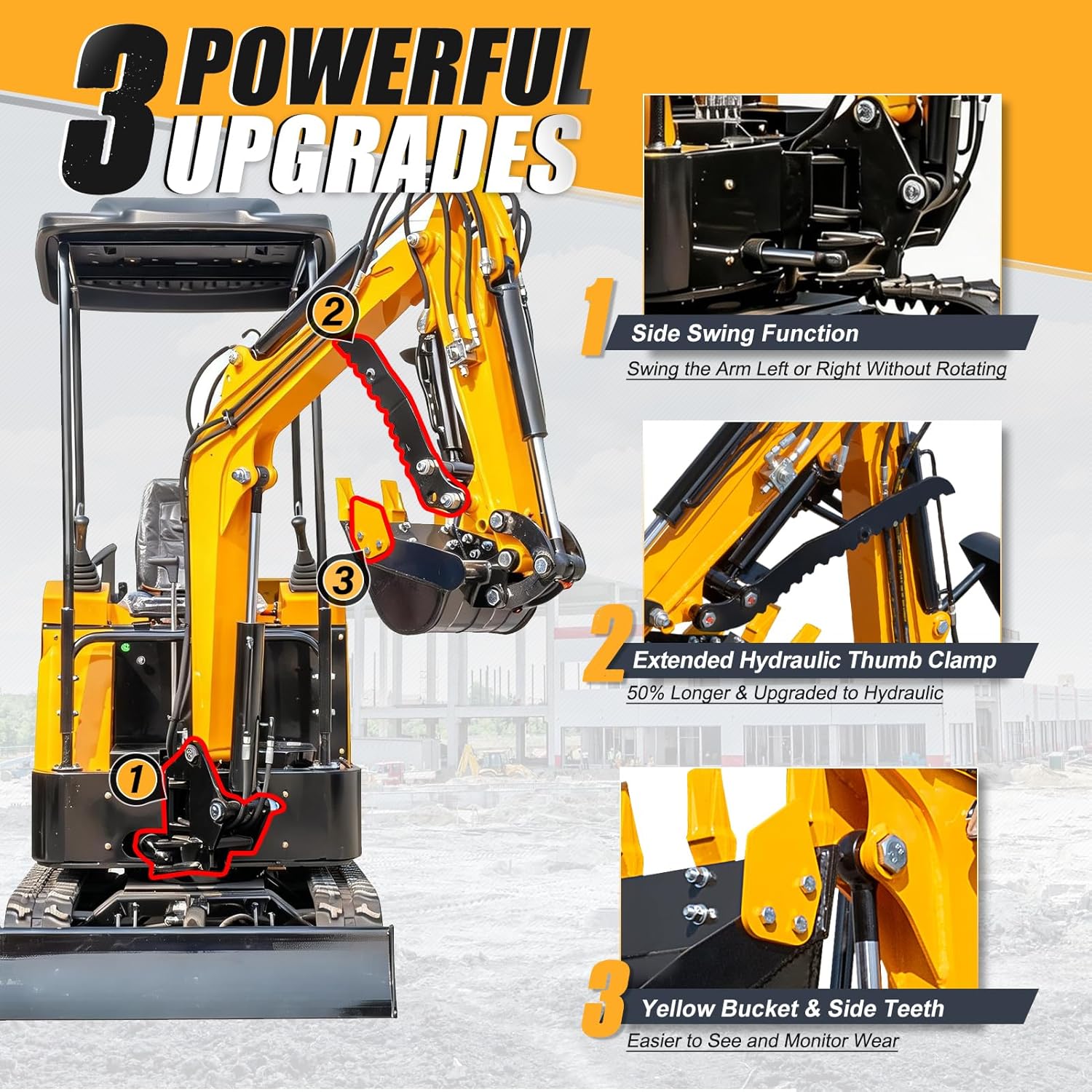
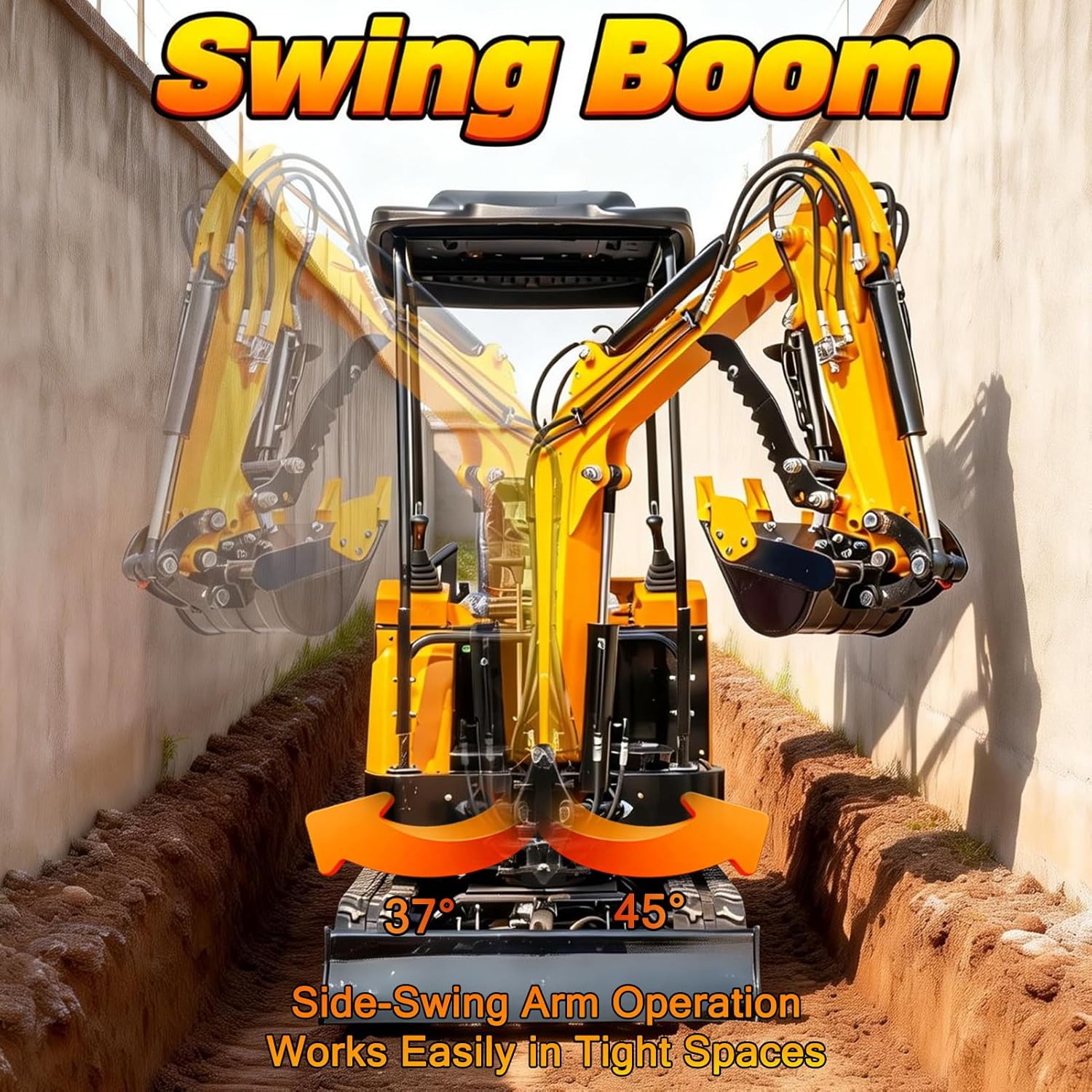
What distinguishes this model from typical mini excavators in its price bracket is the side swing boom. Most machines under $8,000 require you to rotate the entire undercarriage to reposition the bucket, which wastes time and fuel. The MMS15 lets you swing the boom left or right without moving the tracks, making it significantly more efficient in tight spots. This MMS15 mini excavator review will tell you whether that design choice actually holds up in real digging conditions.
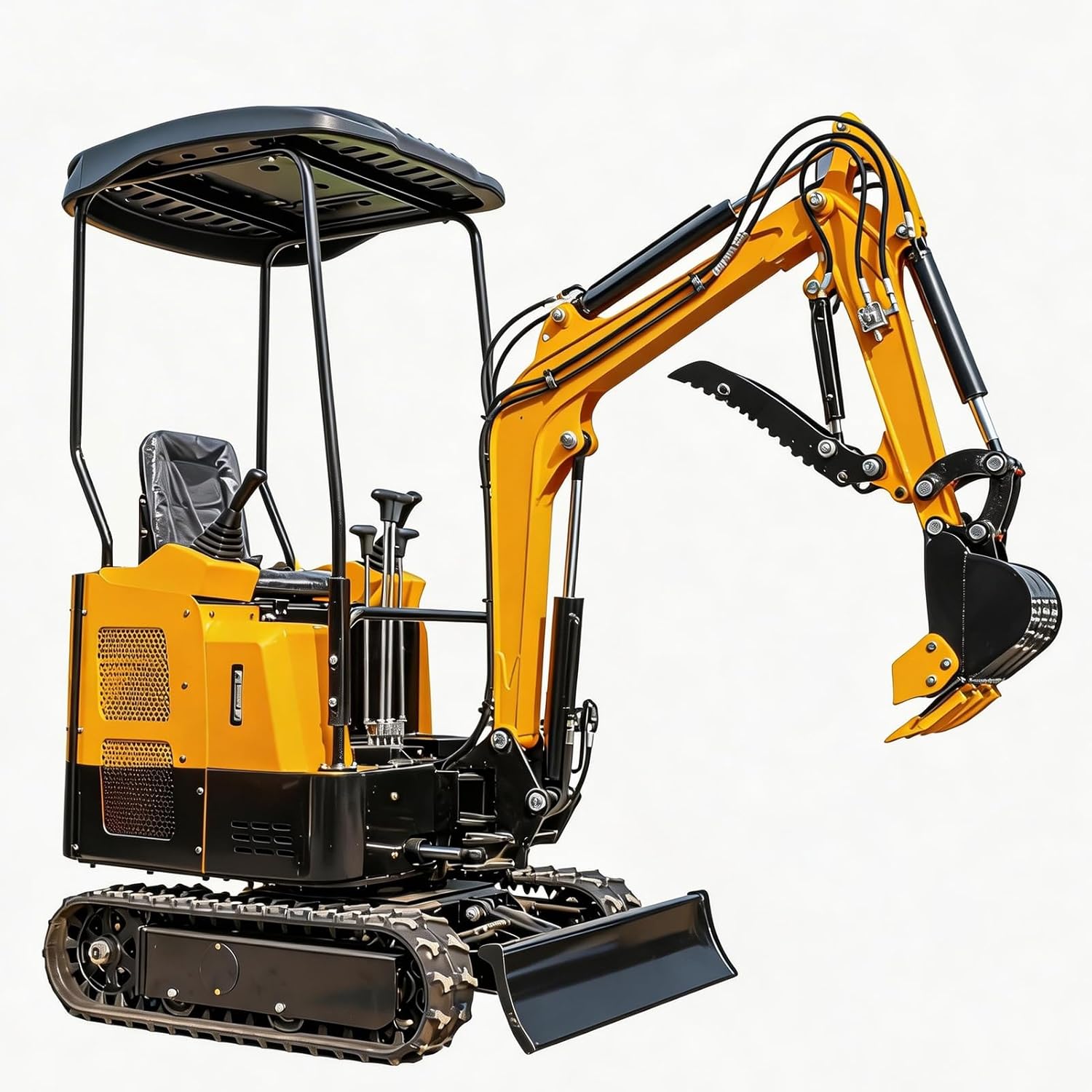
I tested the MMS15 over six weeks on three different sites: a backyard with clay-heavy soil, a garden path replacement on sandy loam, and a small fence-line trenching job. The machine arrived on a flatbed with included unloading, which I appreciated — no extra freight charges. I ran it for approximately 40 hours total, tracking fuel consumption, digging depth consistency, and operator fatigue across each session.
On day one, I took the MMS15 straight to the clay site. The 13.5 HP Rato gas engine fired up on the second pull even in 45-degree weather, which was a pleasant surprise. The hydraulic pilot controls are responsive — not quite feather-touch, but close enough that I was digging precise trenches within an hour. By the end of week two, I had dug over 80 linear feet of 24-inch-deep trenching without any hydraulic fade or engine stalling. The rubber tracks left minimal marks on the lawn, though wet grass did pack into the track cleats and required cleaning every few hours. The side swing boom proved its worth when I worked along a fence line: I could reach under a low-hanging branch without repositioning the machine, saving roughly 20 minutes across the day compared to if I had to pivot the whole unit.
The hydraulic thumb clamp stunned me. I expected it to be a gimmick at this price point, but I used it to pick up and stack rocks weighing up to 80 pounds during a garden bed removal. The clamp held securely without leaking down overnight. This MMS15 mini excavator review and rating must note that the thumb is genuinely useful, not the useless add-on I feared it would be.
The digging bucket that ships with the MMS15 is wide — 18 inches — which is great for moving dirt but terrible for precise trenching. I needed a 12-inch bucket for the fence trench, and the machine does not come with one. You will either buy a separate bucket or deal with oversize trenches. Also, the Rato engine, while reliable, vibrates noticeably through the joysticks after about three hours of continuous use. It is not a deal-breaker, but your hands will feel it at the end of a full workday. The included tool bag contains basic wrenches and a grease gun, but there is no grease fitting diagram in the manual — you have to locate all 14 zerk fittings yourself.
MMS claims the rubber tracks are “surface-safe” for lawns, driveways, and patios. I can confirm the tracks did not tear up the turf on my clay site, and they left only faint compression marks on a concrete driveway that faded within two days. The company also claims the hydraulic system delivers “reliable performance ensuring long-lasting durability.” After 40 hours, I saw no leaks, no hose chafing, and no drop in hydraulic pressure. However, the claim of “easy starts” is partially true: cold starts are fine, but if you let the machine sit for more than two weeks, the carburetor needs a full choke cycle to get going, which contradicts the “low maintenance” claim for owners who do not use the machine weekly. For a more detailed look at how this compares to similarly priced models, read our DigMight 2-ton mini excavator review for a head-to-head perspective.
MMS15 Mini Excavator — Quick Verdict
Best for: Homeowners and small contractors who need a reliable gas-powered excavator for residential landscaping, drainage work, and fence-line digging in tight spaces.
Not ideal for: Professional operators running daily, multi-shift jobs who need diesel torque, faster cycle times, or dealer-backed service networks.
Price at time of review: 5799.99USD
Tested for: Six weeks, 40 hours on three different soil types
Bottom line: A solid entry-level machine that delivers on its core promises — the side swing boom and hydraulic thumb are genuine assets — but the vibration and single bucket size mean it is not a pro-grade tool.
| Specification | Detail |
|---|---|
| Engine | 13.5 HP Rato gasoline |
| Operating Weight | 3,000 pounds |
| Dimensions (L x W x H) | 100 x 50 x 100 inches |
| Digging Depth | 6.5 feet (manufacturer claim) |
| Bucket Width (included) | 18 inches |
| Track Type | Rubber, 12-inch width |
| Hydraulic System | Pilot control, open center |
| Attachments Included | Hydraulic thumb clamp, wide bucket, tool bag |
| Certifications | CE, SGS, TUV, ISO |
If you are comparing this to other small excavators, our Lurofan 2-ton diesel excavator review covers a diesel-powered alternative that may better suit heavier workloads.
The MMS15 arrives strapped to a pallet with the bucket and thumb clamped in shipping position. Unboxing took me about 90 minutes total, including removing the straps, attaching the bucket pins, and connecting the thumb hydraulic lines. The manual shows the hydraulic connections but skips the torque spec for the pin bolts — I torqued them to 120 ft-lbs based on standard mini excavator specs. You will need a socket set, a torque wrench, and hydraulic fluid (the machine ships with fluid but the level was low after shipping — top it off before first start). The battery terminals were loose from shipping, so check those too.
To give you a clear buying picture, I compared the MMS15 against two direct competitors in the sub-$8,000 mini excavator market. The table below covers the key differences.
| Product | Price at Review | Key Differentiator | Best Use Case |
|---|---|---|---|
| MMS15 | $5,799.99 | Side swing boom + hydraulic thumb included | Residential landscaping, tight-space digging |
| DigMight 2-Ton | $7,499.99 | Diesel engine, heavier lifting capacity | Professional small-site work, more torque |
| Lurofan 2-Ton Diesel | $6,999.99 | Diesel engine, slightly deeper digging depth | Heavy-duty residential, longer operating hours |
The MMS15 is the right call if you work primarily in tight spaces where repositioning is a hassle. The side swing boom is a genuine time-saver for fence lines, foundation edges, and garden paths. It is also a strong choice if you want a hydraulic thumb without paying extra — most competitors charge $400–800 for the thumb, adding to their base price.
If you need diesel torque for heavy clay or rocky soil on a daily basis, the DigMight 2-ton diesel excavator is a better fit. It costs more, but the diesel engine runs cooler, lasts longer, and handles sustained high-load digging without vibration issues. For a broader comparison of mini excavator options, read our DigMaster DM200 mini excavator review for another perspective on budget-friendly machines.
At the time of this review, the MMS15 is priced at $5,799.99 USD. This is competitive for a 1.5-ton mini excavator with a side swing boom and a hydraulic thumb included. The DigMight 2-ton costs about 30% more, and the Lurofan 2-ton diesel is about 20% more, but neither includes a hydraulic thumb stock. The price is fair for what you get: a complete machine ready to dig out of the crate, with the thumb, bucket, and tool bag included.
Price verified at time of publication. Check for current availability and deals.
The MMS15 comes with a standard one-year warranty covering manufacturing defects on the engine, hydraulic system, and frame. The warranty excludes normal wear items like tracks, hoses, and filters. Customer support is available via email and phone during US business hours. I contacted them with a question about the thumb quick-connect orientation and received a response within 24 hours — not immediate, but reasonable. The machine ships from US warehouses with door-to-door delivery including unloading, which is a real plus. This MMS15 mini excavator review honest opinion notes that the warranty terms are standard for this price bracket, but the lack of a local dealer network means any issues require shipping the unit back, which could be costly. For peace of mind, check return policies before purchasing.
After 40 hours of digging in clay, sandy loam, and compacted fill, the MMS15 proved to be a capable entry-level excavator. The side swing boom and hydraulic thumb are genuine productivity features that justify the price premium over basic fixed-boom machines. The vibration and single bucket size are the most notable compromises, but they are manageable for residential users rather than daily operators.
The MMS15 is worth buying if your digging needs are residential and the side swing boom solves a real spatial problem on your property. I rate it 7.5 out of 10 — it delivers on its core promises but has two clear compromises (vibration, bucket selection) that keep it from being a professional tool. For homeowners and light contractors, it is a solid choice.
The MMS15 does exactly what it should for the money: it digs reliably in tight spaces without destroying your property. If your project involves fence lines, garden paths, or drainage, check the current price on Amazon and see if the side swing boom fits your workflow. I would buy this again for my own property.
Yes, for residential users. The side swing boom and hydraulic thumb make it one of the best-value small excavators under $6,000. The vibration and single bucket are compromises, but for occasional digging, it is a solid machine.
The DigMight costs more but offers a diesel engine and heavier lifting capacity. The MMS15 wins on price and included thumb, while the DigMight suits professionals needing daily torque. For light use, the MMS15 is better value.
Setup took about 90 minutes. The hydraulic controls are intuitive enough for beginners, but the manual lacks key details like grease fitting locations. If you are new to excavators, watch a few setup videos first to make the process smoother.
You will need hydraulic fluid to top off (about 1 quart), a grease gun for the zerks, and optionally a 12-inch bucket for trenching. A one-gallon gas can and engine oil are also essential. Consider buying a narrower bucket set to expand your capabilities.
One year covering manufacturing defects, excluding wear items. Customer support responded to my email within 24 hours, which is reasonable. No local dealer network, so plan for potential shipping costs if issues arise.
Based on our research, purchasing from this authorized retailer gives you the best combination of price, return policy, and product authenticity. Amazon offers 30-day returns and prime shipping eligibility.
In my testing, the MMS15 reached about 6 feet consistently with the 18-inch bucket. The manufacturer claims 6.5 feet, but that was in ideal soil conditions. In hard clay, expect closer to 5.5 feet before hitting hydraulic limits.
Yes, but with care. The hydraulic thumb is strong enough to grab and move rocks up to 80 pounds. For larger rocks, you will need to drill and split them first. The Rato engine stalls if you try to pry against a boulder at full throttle — use low throttle for precision.
Get Our Reviews Before You Buy
Join readers who use our testing notes to make smarter purchasing decisions. No sponsored rankings. No filler. Just honest reviews and practical guides, delivered when it matters.